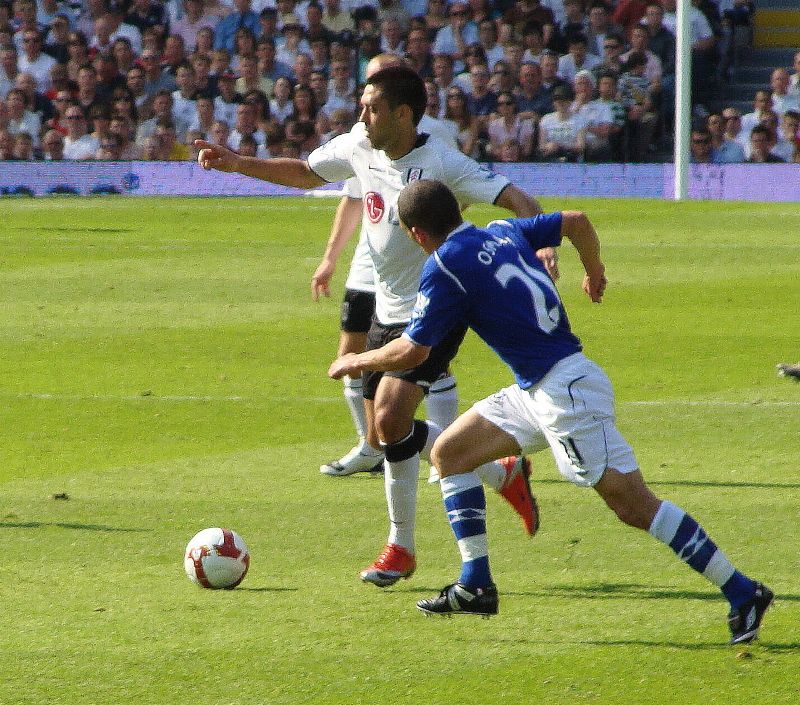
Clint Dempsey, one of best US soccer players (Wikicommons)
The United States men’s national soccer team, USMNT, is ranked 13th in the world according to two major institutions: FIFA (from the French Fédération Internationale de Football Association, meaning International Federation of Association Football) and World Football Elo Ratings.
Competing for the first time in 1930, when they reached third place in the first World Cup tournament in Uruguay, the United States have had since then an active if underwhelming participation in World Cup matches.
The United States hosted the World Cup in 1994 from June 17 to July 17. The games were played in many venues around the country: California, Michigan, New Jersey, Florida, Illinois, Texas, Massachusetts and Washington D.C. The Rose Bowl in Pasadena, California was the stadium were most of the games took place, including the semi finals and finals. The games had an average attendance of nearly 69,000 people bringing in a staggering 3.6 million people to games, constituting the world’s attended record to date.

Striker was the American mascot for the games, but in spite of all the rooting and its automatic qualification for being the host country, the United States did not get beyond the second round, when the were defeated by Brazil, the winners of the tournament, in a 1-0 match, considered one of the best performances ever by a U.S. team.
This 2014 World Cup in Brazil, the United States will be playing in one of the most difficult groups against Ghana, which they already defeated in a excitement-filled 2-1 game on June 16; then Portugal on June 22, whose team will be supported by one the world’s highest ranking players, Cristiano Ronaldo; and finally on June 26, Germany, which already claimed a 4-0 victory against Portugal.
Here is some useful soccer vocabulary to know during the next games as you are rooting for your favorite team:
Corner kick: a kick taken on one of the corners of the field, which occurs when a team puts the ball out behind their own goal line;
Foul: when any player breaks one of the rules of the game;
Free kick: a player gets a free kick to try to score a goal as a result of a foul. The opposing team gets to use players to form a barrier of defense between the kick and the goal;
Penalty: when a player is attacked in the box closest to the goal and subsequently gets to kick the ball straight to goal without a barrier from the opposing team;
Yellow card: shown to a player by the referee for committing an offense. If a player receives two yellow cards during a game he is out;
Red card: a player receives a red card for violent acts, major offenses or after two yellow cards;
Diving: a form of cheating in which a player dives to the ground pretending an opponent committed a foul against him;
Equalizer: a goal that ties the game;
Extra time: additional 30 minutes that have to be played after the 90-minute match failed to produce a winner, which happens only after the first-round matches in a world cup;
Penalty shootout: if there isn’t a winner after the first 90 minutes and extra-time are played, then there is a penalty shootout to decide the winner;
Hat-trick: when a player scores three goals in a single match (as German player Muller did against Portugal);
Header: when a player scores a goal using his head (as U.S. player Brooks did against Ghana);
Offside: one of the most contentious and difficult to understand rules in soccer basically means that a player is offside when he is in the opponent’s side of the field and is closer to the goal than both the second-last defender and the ball at the moment the ball is played to them by a teammate. (If you didn’t understand this, don’t worry, nobody does!)
Enjoy the games that are going to be played until the day of the final on July 13, and remember to root, wave your flag and scream as loud as you can when your favorite team scores a goooooaaaaalllll!
