Maybe it’s odd that one of the most recognizably Irish holidays is bound up with the history of the United States. The first St. Patrick’s Day parade is believed to have been held in Boston, Massachusetts in 1737, organised by descendants of Irish settlers. Today, New York holds the largest parade in the world with 150,000 participants every year, including marching bands, members of Irish-American societies, the police force, and various dignitaries. Smaller, but no less elaborate parades take place in all the major cities in Ireland, where the day has come to represent a chance to celebrate pride in Irish culture and history.
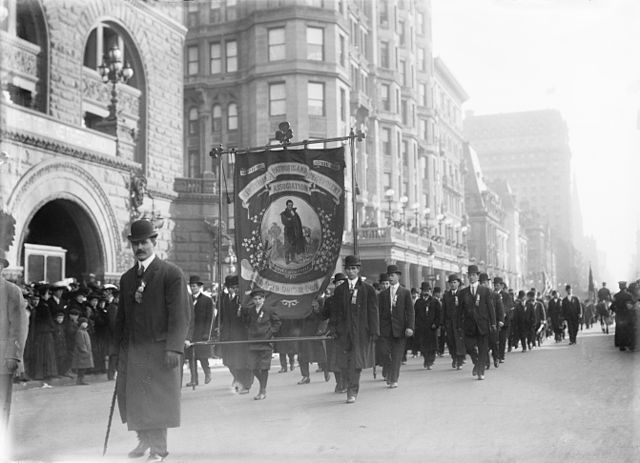
St. Paddy’s Day (not St. Patty’s Day!), as it is often called, was originally an exclusively religious celebration in Ireland. It was officially recognised by the Catholic Church in the early 17th century, but it did not become a public holiday until 1903. The festival, which fell on March 17th, was an occasion for attending Mass, though observers were given dispensation to break the strict Lenten restrictions on food and alcohol for the day.
Legend has it that Patrick was a 5th-century missionary who was transported as a slave to Ireland from his birthplace in Britain. He is credited with introducing Christianity to the largely pagan population. In addition to banishing snakes, Patrick is best-known for his use of a three-leafed shamrock to explain the nature of the Holy Trinity to the Irish.
The wearing of green ribbons and shamrock emblems on this day is an enduring tradition that can be traced back several centuries. These symbols subsequently became associated with nationalism and Irish pride when the United Irishmen adopted green as its official colour during its failed rebellion of 1798. A folksong named “The Wearing of the Green” tells of the persecution of supporters of the United Irishmen for wearing green.
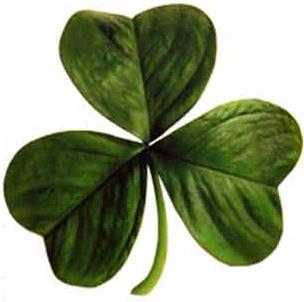
A curious tradition known as “drowning the shamrock” is practised on St. Patrick’s Day. The earliest account of this custom was from the 19th century, but it may be much older. It involved reviving the shamrock that had been worn all day by dunking it in a tumbler of whiskey known as pota Pádraig or “St. Patrick’s pot”.
Below is Dóchas Linn Naomh Pádraig “St. Patrick is our Hope”, a hymn in Irish dedicated to the patron saint.
