Hanuka חנכה, also known as The Festival of Lights, begins on the 25th day of the month of Kislev on the Hebrew Calendar which corresponds to December 16 this year, but other years it can occur in January (and sometimes even November!) on the Gregorian Calendar. The last day of Hanukah this year is December 24.
Though Hanuka is generally thought to celebrate the Miracle of the Oil, some people may not know about the important historical battle it commemorates. As Hanukkah is the most historically documented of all of the Jewish holidays, early sources of the story appear in the First and Second Books of the Maccabees and the writings of Josephus. While these texts do not appear in the canon of the Hebrew Bible, they can be found in Apocrypha literature (appearing between the Old and New Testaments). In 167 BCE The Jews of Judea, under the rule of King Antiochus Epiphanes, revolted. The King, a Hellenized Syrian, forced all peoples under his rule to adopt Greek customs and observances. He forbids the practice of any Jewish rituals, observing the Sabbath and even circumcisions. The Holy Temple, בית המקדש, is defiled with Greek idols and livestock. An old Temple Priest, Mattathias, enraged by the state of the Jews under Antiochus, takes his five sons to the mountains where they lead a guerrilla war against a series of the king’s armies. His son, Judah Maccabee יהודה המכבי, took over leadership of the fighters and in 165 BCE, Jerusalem and the Holy Temple were liberated and reclaimed. The word Hanukka, חנכה is Hebrew for dedication because this is a day in which we celebrate the victory of the Maccabees and the re-dedication of the בית המקדש.
Over time, the Rabbis in the mid 4th century, CE mention the Miracle of the Oil, the story we have come to associate with the holiday of Hanukkah. The story goes something like this: After their defeat against the Greek Armies, the Maccabees return to the Holy Temple to purify, clean and re-dedicate it to God. The Menorah מנורה or candelabra in the Holy Temple needed to be lit and only the purest and cleanest olive oil with the seal of the high priest could be used. (That menorah would have had the customary seven branches, not nine like a Hanukkah menorah). One small jug of this holy oil was found with only enough oil to burn for one day, yet it burned for eight days, the time needed to prepare a fresh supply of oil for the menorah. An eight-day festival was declared by the Jewish sages to commemorate this miracle.
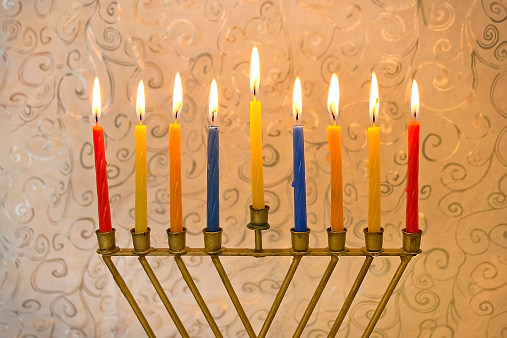
The major ritual associated with Hanukkah is the lighting of the Hanukkah candles. The Hanuka חנוכיה, or Hanuka Menorah is lit for eight nights beginning with one candle and adding a new light each night. Many homes place their Hanukkiot in a window or door facing the street. Traditional foods eaten on this holiday include fried potato pancakes also known by their Yiddish name, latkes, and jelly donuts or as they are called in Hebrew, sufganiyot סופגניות . As Christmas is a major gift buying holiday in the Western world and falls around the same time as Hanukkah, gift giving has been embraced as a newer holiday tradition.
