The imperfect and the preterite are two important tenses (but not the only ones) used in Spanish to talk about the past. You have to be patient with yourself because mastering them is going to take a while. So, let’s practice!
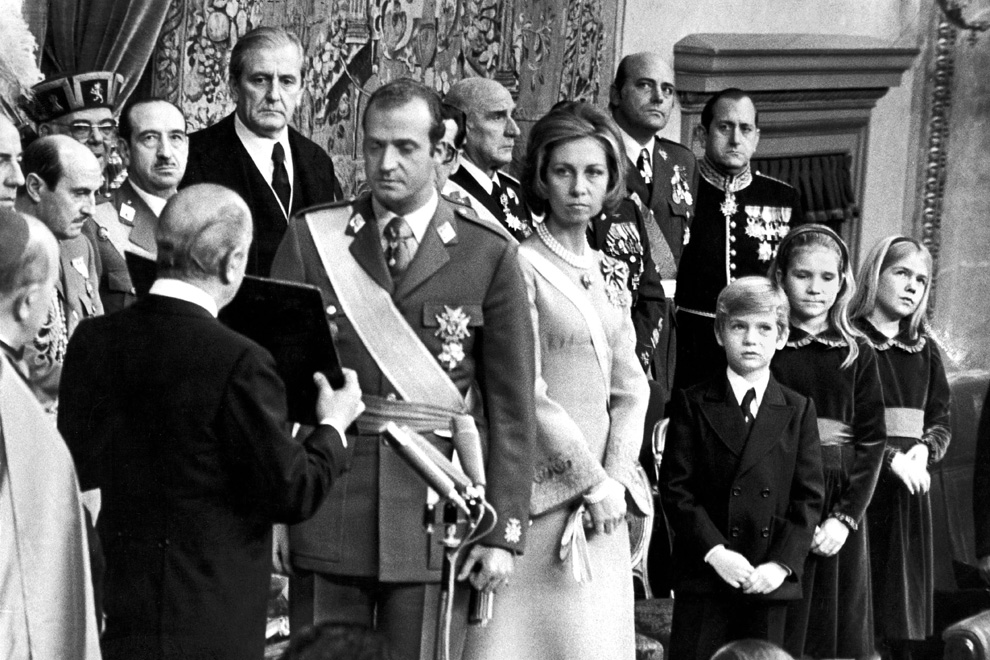
Imagine that you want to write about King Juan Carlos - who you may have read recently abdicated the throne in favor of his son Felipe- as seen in the picture above at his coronation in 1975. First, you need to explain some specific facts to provide basic information; you will do this with the preterite:
PRETERITE: Used for specific events in the past accompanied by dates
In 1969 dictator Francisco Franco named (nombró) Prince Juan Carlos his successor. Two days after Franco’s death, on November 22nd of 1975, the Spanish parliament proclaimed (proclamó) Prince Juan Carlos King of Spain. The new king introduced (introdujo) reforms to transition to democracy, and in 1981 he was (fue) decisive in stopping a military coup. Some days ago - on June 2nd - King Juan Carlos abdicated (abdicó) the throne. The news surprised (sorprendió) Spaniards a lot.
The pictures of that day are part of the mental album of all Spanish people. In order to describe the scene above, the best past tense is THE IMPERFECT. Remember that - ar verbs have “-aba endings”, and - er and - ir verbs incorporate the “- ía endings”.
IMPERFECT: Used to describe things in the past, and also to translate the past progressive: were looking = miraban or estaban mirando
The man in the picture was (era) young - Juan Carlos was 36 years old tenía 36 años. He was (estaba) married to Princess Sofía of Greece, and they had (tenían) three blonde children. Something was going on outside of the picture frame because Prince Felipe and Princess Cristina were looking (miraban) up. In the picture the representatives of the Spanish government, the army, and the church were (estaban) extremely serious - the new king was receiving (recibía) the responsibility of leading Spain through a very uncertain immediate future. You can not see it, but sitting on a banquet in front of the king there were (había) a crucifix and a crown. In case you are wondering, the gown of the queen was (era) red.
If you have the Living Language Spanish online course, app or Complete Edition, go to Lessons 7, 8 and 9 of Advanced for more practice on forming the preterite and Lesson 11 and 12 for more practice with the imperfect. Also, we offer free online practice of both tenses at our Language Lab. Try this game to test your knowledge of the preterite and this game to test your knowledge of the imperfect.
