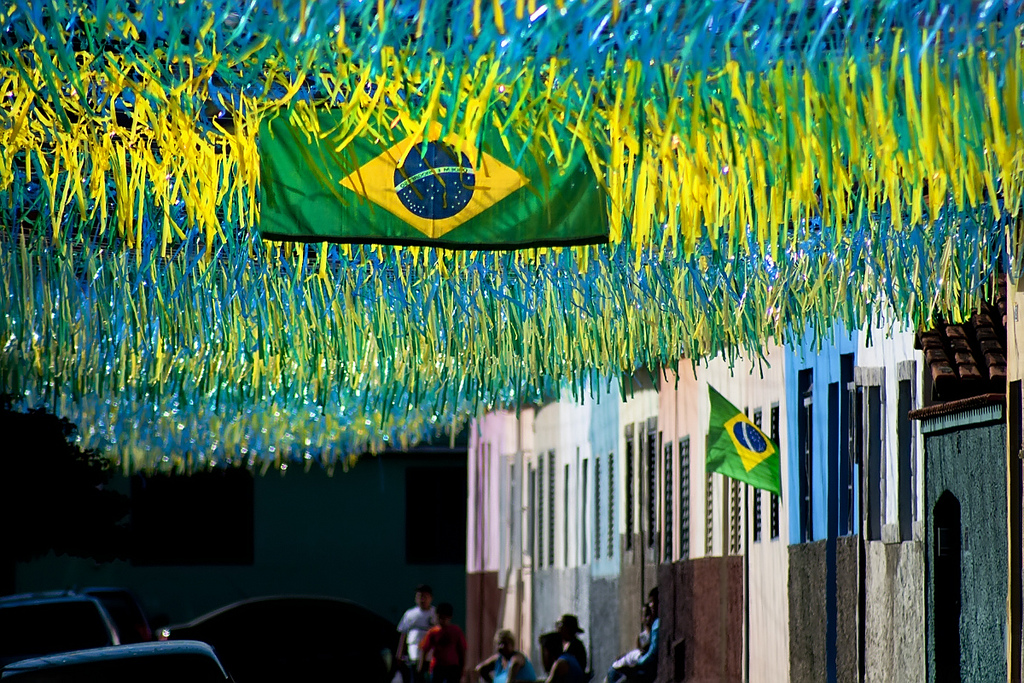
Brazil World Cup
With only two days remaining for the start of one of the world’s largest sporting events, this is a great time to look at the numbers involved in the FIFA World Cup competition.
The World Cup starts on June 12 and the final will be played on July 13 in one of the most famous soccer stadiums in the world, Estádio do Maracanã (click here to learn how to pronounce Maracanã in Portuguese) in Rio de Janeiro.
Esta é a segunda vez que o Brasil sedia a copa do mundo, a primeira vez foi em 1950.
This is the second time Brazil hosts the competition, the first time was in 1950.Durante três anos, duzentos países competiram para as trinta e uma vagas disponíveis (o país anfitrião entra automaticamente).
During three years, 200 countries competed for the 31 available slots (the host country gets in automatically).A competição será entre trinta e dois times nacionais.
The competition will be among 32 national teams.Oito dos times que participam já ganharam o cobiçado troféu.
Eight of the participating teams have already won the coveted trophy.Treze times da Europa.
Thirteen teams from Europe.Cinco times da África.
Five teams from Africa.Cinco times da América do Sul.
Five teams from South America.Quatro times da Ásia.
Four teams from Asia.Quatro times da América do Norte/América Central/Caribe.
Four teams from North America/Central America/Caribbean.Um time do pais anfitrião.
One team from host country.Cada time pode trazer vinte e três jogadores.
Each team can bring 23 players.
A competição é dividida em cinco fases:
|
The competition is divided into five stages:
|
PRACTICE: Here are some other notable numbers from the preceding qualifying matches, and to practice numbers in Portuguese, complete the blanks in the translation with the equivalent figure.
oitocentas e vinte partidas jogadas. _____ matches played.
dois mil trezentos e cinquenta gols marcados. _____ goals scored.
trezentas e noventa e nove vitórias em casa. _____ home wins.
cento e oitenta e cinco empates. _____ draws.
cento e um cartões vermelhos. _____ red cards.
dois mil novecentos e dezesseis cartões amarelo. _____ yellow cards.
cinco mil setecentos e cinco jogadores. _____ players.
Answers: 820, 2350, 399, 185, 101, 2916, 5705
For more on numbers, go to Lessons 3 and 6 of the Living Language Essential Brazilian Portuguese.
