Bealtaine takes place on the 30th of April/1st of May. It is one of the quarterly calendar festivals which have been celebrated in Ireland since ancient times, marking the seasons and corresponding to yearly cycles of growth. According to the astronomical calendar, it lies roughly half-way between the vernal equinox and the summer solstice in the Northern Hemisphere. It was an auspicious occasion in early Ireland, as it heralded a time when food became more plentiful. The crucial milk yield was bountiful, providing an added boost of nutrition to a population which mainly relied upon grains, vegetables, honey, and the occasional treat of fish or meat.
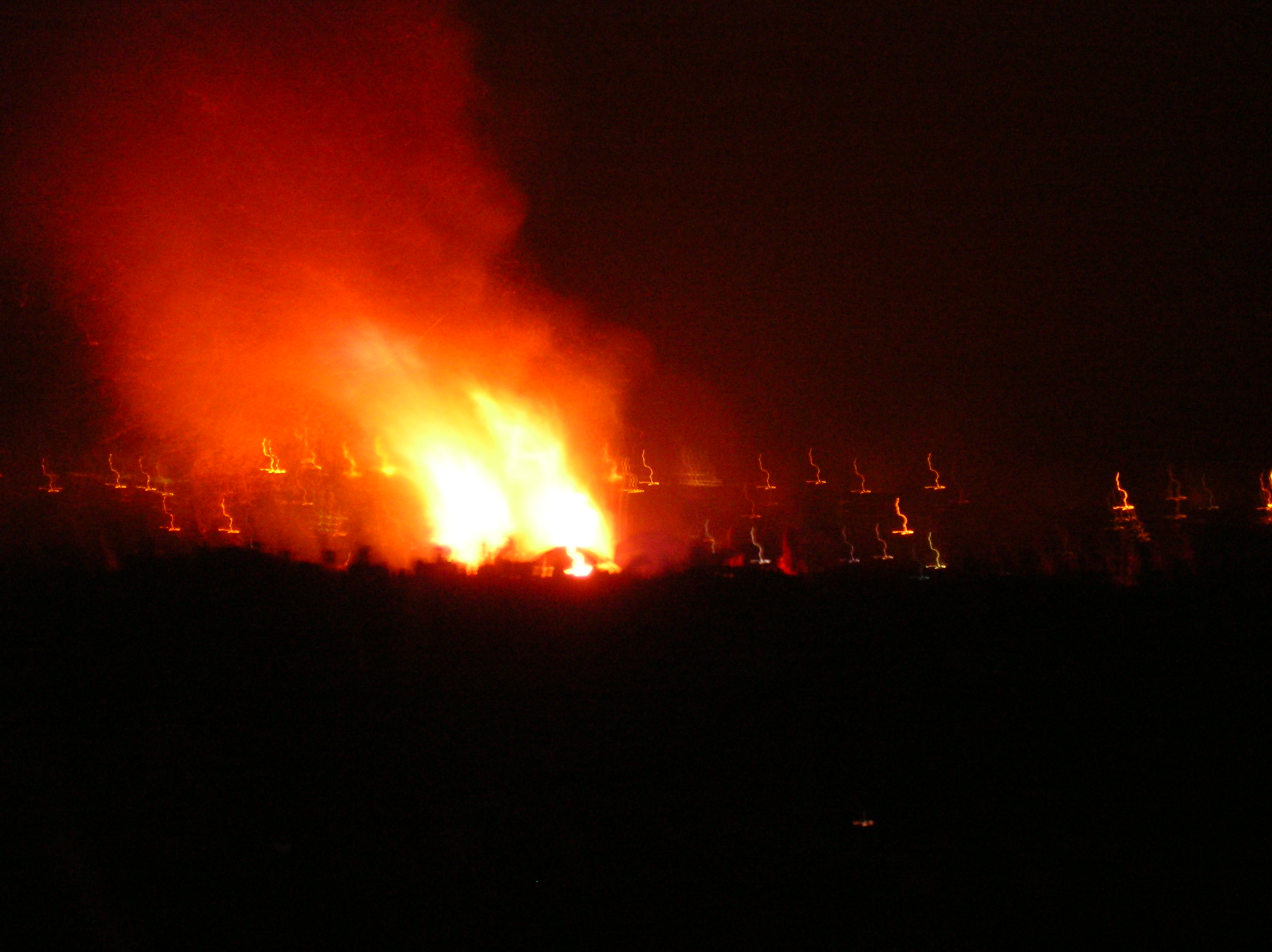
As with all of the quarterly festivals, there are many customs associated with Bealtaine. On the evening of the 30th of April, bonfires were lit as a matter of course. Farmers were known to build two fires and drove their cattle between them – a tradition which had the practical purpose of killing fleas and other pests which were an irritant to the beasts during the summer months. The phrase idir dhá thine Bhealtaine ‘between two Bealtaine fires’ has its origins in this custom. It means ‘in a dilemma’ or ‘between a rock and a hard place’.
There is a longstanding tradition of gathering boughs of certain trees in order to make a ‘May Bush’ which was then erected in front of the house. The May Bush was believed to guarantee an abundance of milk for the rest of the summer. Because of the delicate balance between the natural and the supernatural worlds on Bealtaine, it was imperative to use the correct type of plant. Branches from elder, rowan, blackthorn, holly, hazel and willow were acceptable, as long as they did not cross the threshold. The May Bush was decorated on the evening of April 30 with eggshells and coloured paper. This reverence for plants – reflected in many other Celtic societies – is believed to derive from a pagan tree worship, the remnants of which can be seen in the modern adaptation of the Germanic tradition of the Christmas tree.
The magic associations of Bealtaine extended to an almost obsessive fear of charms being used to perform acts of evil. Nothing was allowed to leave the house, whether cinders from the fire, food scraps or dirty water. This was based on a belief in sympathetic magic, that evil-doers could use objects to place spells upon their owners, or in particular on Bealtaine, to spoil or steal their milk. Many protective charms were performed on this day to protect against milk-theft.
A traditional song associated with Bealtaine is ‘Thugamar féin an samhradh linn’, which translates as ‘We have brought the summer with us’. It celebrates the promise of summer – the bright, easy days of plenty:
Samhradh, samhradh, bainne na ngamhna,
Thugamar féin an samhradh linn.
Samhradh buí na nóinín glégeal,
Thugamar féin an samhradh linn.
‘Summer, summer, milk of the calves,
We have brought the summer with us.
Yellow summer of the bright, clear daisies,
We have brought the summer with us.’
