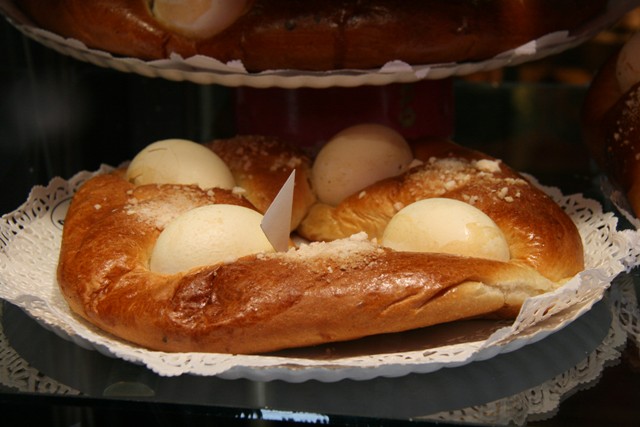
There are no conejos de Pascua (Easter bunnies) in Spain. Instead, la mona de Pascua is the Easter protagonist in the eastern part of the country, comprised of Aragón, Cataluña, Valencia and Murcia.
La mona is a sweet pastry with un huevo duro (a boiled egg) in the middle. The egg represents life and, therefore, la resurrección de Cristo (Christ’s resurrection). In recent times, las panaderías y las pastelerías (bakeries and pastry shops) have swapped el huevo duro for un huevo de chocolate (a chocolate egg) in order to make la monamore appealing to the younger public. In Cataluña, la mona has been totally transformed becoming a mini sculpture made completely of chocolate. In Cataluña, los padrinos(godparents) are in charge of buying la mona for sus ahijados (their godchildren). In other regions los abuelos (grandparents) take on this sweet responsibility.
Thanks to the good weather, la mona is eaten el domingo y lunes de Pascua (Easter Sunday and Easter Monday) in picnics al aire libre (open air picnics). Other typical foods that are shared during those festivities are la longaniza de Pascua and la sobrasada (two different types of Spanish sausages), and el huevo duro previously died in red. In Valencia you have to beware of people with a boiled egg in hand, since, following the tradition, they might be looking for a distracted forehead where to cascarlo (crack it).
Test your Spanish comprehension and your baking skills by trying to make your own according to the instructions given in this video receta (recipe):
Video receta para la Mona de Pascua
