Joyeuses Pâques! (Happy Easter)
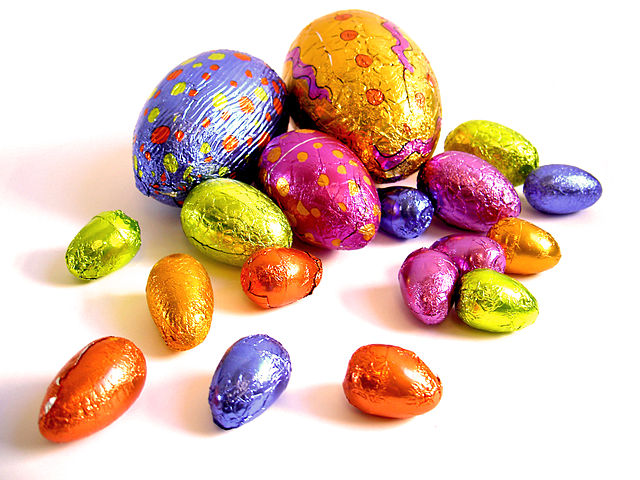
La fête de Pâques (Easter holiday) celebrates the return of Spring with l’œuf (the egg) as an important symbol of germination. As in other western cultures, decorated eggs - mostly edible, en sucre ou en chocolat (made with sugar or chocolate) -, are a traditional gift given during Easter. They come in the shapes of œufs (m.) (eggs), poules (f.) (chickens), poissons (m.) (fish) and cloches (f.) (bells), which children must find.
Since bells in churches were silent as a sign of mourning for days before Easter, children were told that bells were on their way back from Rome où le Pape les avait bénies (where the Pope had blessed them). Leur carillon (m.) (their chime) during the night before Easter Sunday announced the joy of the resurrection of Christ through the return of the bells.
Loaded with goodies, the bells would pour in gardens, prairies (f.) (meadows) and balcons (m.) (balconies). In the Alsace region, it is le lapin de pâques (the Easter bunny) - a pagan symbol of fertility - who bring Easter eggs in les nids (m.) (the nests) children had prepared and décorés (decorated), following the German tradition. Hence, children must trouver les œufs cachés (find the hidden eggs).
With the ending of penance, la viande (meat) reappears on the tables, hence the term Pâques charnelles (carnal Easter) that comes from le Moyen-Âge (the Middle Ages). The feast comprises: de l’agneau (m.) (lamb), entier ou hâché (whole or ground); du porc (m.) (pork); eggs in all forms - omelettes (f.) (omelettes), des œufs durs ou à la coque (hard or soft-boiled eggs); rich cakes and red soups (slices of white bread soaked in milk and eggs then browned with butter in a pan).
(Note: click on blue links to hear audio clips)
