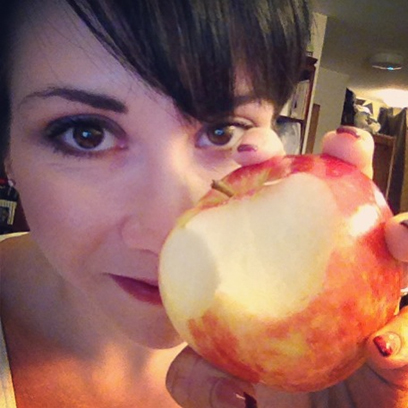
We’d like to introduce you to Sasha Maggio - a Living Language fan we met on Twitter. A motivated polyglot, Sasha has studied Italian, Portuguese, Russian, Greek, German, French, Swedish, Japanese, Spanish, a little Chinese and a little Arabic independently since age 12. After Sasha scooped up a number of vintage, vinyl Living Language courses we just had to find out more about her!
How many languages do you speak?
I’ve studied more than 10 languages but some more than others.
I’m a native English speaker, and when I was growing up I actually had the impression that the only people who could learn other languages were “special” or lived in other countries. I didn’t realize that people could study them at will. When I was about 12 or 13, I came across a small section in the library full of foreign language books and tapes and it felt like I’d stumbled upon a big secret.
In my opinion, the Latin-based languages are the easiest next to English, and their similarities make them all relatively equal in the way I recall them. Japanese is my best language, but it’s the one I’ve studied the longest and with the most consistency.
How did you start down the polyglot path?
The first language book I borrowed from the library was “Japanese in 10 Minutes a Day” by Kristine Kershul. It was very basic, though, designed for travelers, so it wasn’t quite enough to really help me advance. There weren’t many other Japanese books, however, so I started to try all of the books available at my library. As I read through them and tried the different languages, I just fell in love with them all. Some more than others, of course, but it felt good to learn them and it was empowering to learn them on my own. The books with tapes became some of my favorites because the native speakers in the lessons gave me more confidence since I could double-check my pronunciation and mimic what I heard.
I guess because I was a kid in a big family, and with big families resources are sometimes scarce, the fact that the library was free and the language study was something I could do independently without help from a parent, it just became a passion. I actually never thought I would get to use most of the languages but now I’m in Europe and able to travel a bit, so the review and practice before a trip is really enhancing the travel experience for me.
What was the first Living Language course you owned?
The Living Language Japanese book and tape set from the early/mid-1990s was the first one I ever owned. It was a Christmas gift that I received in 1996. Language books can get expensive, and the internet was not the same vast resource it is now, so that was a very special gift and I still have the same set on my bookshelf. I love the history that Living Language has with language study, all the way back to the 1940s. Sometimes, even though languages change, those older sets are really worth going through, for the experience and to get a feel for how things have changed or not changed since.
I recently saw Living Language sets with records and books from the 1950s on eBay and I managed to get Spanish, French, Italian, Russian, German, and Japanese, plus a Living Language Children’s French set, all in great condition. When I received the different packages in the mail, it was like Christmas combined with that first library experience! They’re special. They have a history, and these sets survived for over 60 years. Now they have a safe place on my book shelves, and as soon as I get a record player I’ll enjoy listening to them one by one!
What is your favorite word? In any language.
I don’t think I could pick just one word! If I had to choose the most important words that also tend to be favorites, I’d say “Excuse me” “Please” and “Thank you” in all languages. These words can make a huge difference in how language learners approach native speakers, and saying these words properly can help influence the reactions or responses from native speakers because it shows the learner is thoughtful enough to be polite even if they are a total novice with the rest of the language. They’re the first words I aim to learn really well when I work with a language and they’re the ones I would recommend anyone learn quickly and well.
In Japanese, there are some things you say that don’t translate well into English, and so the language learner has to gain an appreciation for the culture and understanding the context of a dialogue in order to fully appreciate the meaning of the words used. There’s a phrase in Japanese that’s used all the time and the literal translation is something like “Please be nice to me” but it’s used to mean “It’s nice to meet you” and it’s used at the formation of or continuation of partnerships in business, and it’s even used as part of a New Year’s greeting to imply a request of continued niceness for the new year. The versatility of the phrase どうぞよろしくお願いします (douzo yoroshiku onegaishimasu) makes it one of my favorites in my favorite language.
I also really like keigo which are the ultra-polite or ultra-humble words and grammar used in Japanese, but sadly not as much as it was used in the past. In fact, most Japanese don’t learn keigo in school anymore, they have to take special classes as adults if they wish to learn it or if they’re required to use it in business. It was my favorite to learn in school when I took Japanese classes! Not so much because of the words, but because of the meanings and the way they’re used.
