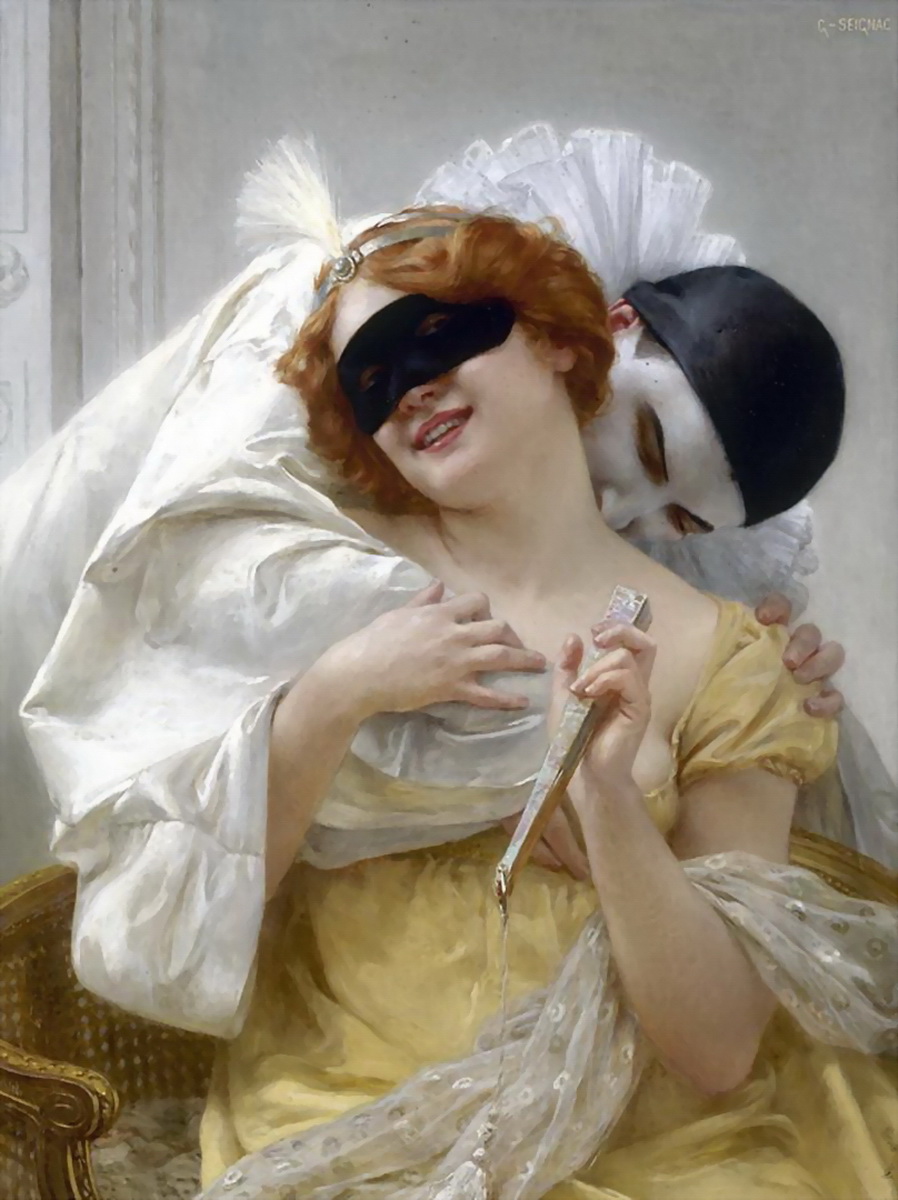
Pierrot and Columbine
Most people in February are getting ready to celebrate Valentine’s Day, but not in Brazil. This isn’t because Brazilians don’t have a day dedicated to lovers - that day is celebrated on June 12th, Saint Anthony’s Day or Dia dos Namorados (literally, day of girlfriends and boyfriends). Traditionally on that date, like in the United States, couples exchange gifts and go out for a romantic dinner.
Nevertheless, February is still one of the most romantic months thanks to Carnaval or Carnival, a four-day extravaganza celebrated 40 days before lent, usually in February, but that this year falls on March 1st - March 4th.
When people think of Carnaval, they think of floats and beautiful Brazilian dancers parading down the streets of Rio de Janeiro, but Carnival is not only that; it also includes parades in cars (corso carnavalesco), street festivals (blocos de rua) and masquerade balls (bailes de carnaval).
Masquerade balls, fashioned after the ones in Venice, are held in every city, town and municipality no matter how small or how distant. These balls feature live bands that play sambas and marchinhas (a slower genre of Carnaval music) and revelers dance or brincam (play) dressed up in costumes. These include from homemade outfits to some of the most traditional, such as the Pierrot, the Columbine and the Harlequin, stock characters from the Italian school of theater known as the Commedia dell’Arte.
Thus, the story of the forlorn Pierrot, who during a ball fell in love with and was dismissed by Columbine, Harlequin’s mistress, repeats itself every year. For four consecutive days, these balls with animated music, feverish dancing, and abandoned drinking bring lovers together only to separate them on the morning of Ash Wednesday. Or as the poet Vinicius de Moraes put it: para tudo se acabar na quarta-feira, for everything to end on the Wednesday.
And since one cannot talk about Carnaval without linking it to music, read the following marchinha, little march, by David Nasser and Jota Junior that expresses the melancholy created by Carnaval’s ephemeral hook-ups.
After you have read the lyrics and the translation, click on the link below to hear the music. Note how this genre is much slower than sambas. The link also has other marchinhas and because they are composed for people to sing along, do just that and practice pronunciation! Use a dictionary to find words you don’t know.
| Confete, Pedacinho colorido de saudade Ai, ai, ai, ai Ao te ver na fantasia que useiConfete, Confesso que chorei Chorei porque lembrei Do carnaval que passou Daquela colombina que comigo brincou. |
Confetti, Colorful little piece of longing Ow, ow, ow, ow When I saw you on the costume I woreConfetti, I confess I cried I cried because I remembered The previous Carnival And the Columbine that danced with me. |
