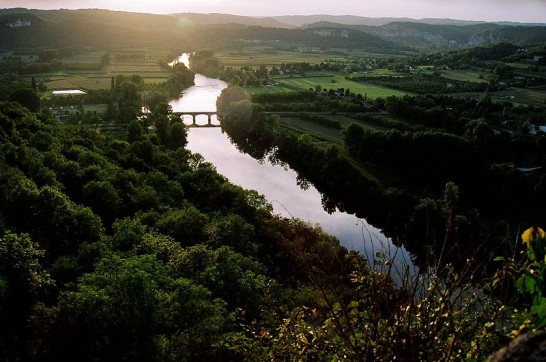
Near the Bordeaux region, in the southwest of France is a land of hills and forests cut by a great river, set with a multitude of lovely villages hidden in the countryside. The department of Dordogne is a jewel of France a little off-the beaten path, full of prehistoric wonders and culinary delicacies.
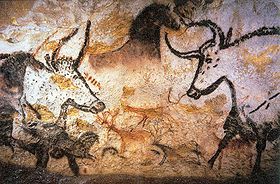
Grottes de Lascaux
Les Grottes de Lascaux (Lascaux Caves) are perhaps the single most famous attraction in Dordogne. Discovered by accident by four teenagers in 1940, this complex of caves are known throughout the world for their impressive, vivid prehistorical paintings of outstanding aesthetical quality that use the contours of the rock faces to seemingly give life to the scenes represented.
The paintings started to rapidly fade away due to the carbon dioxide exhaled by the crowds of visitors, and the caves were closed in 1963; 20 years later, a replica was opened nearby, providing a similar experience to the public. You can do a virtual visit of the caves here.
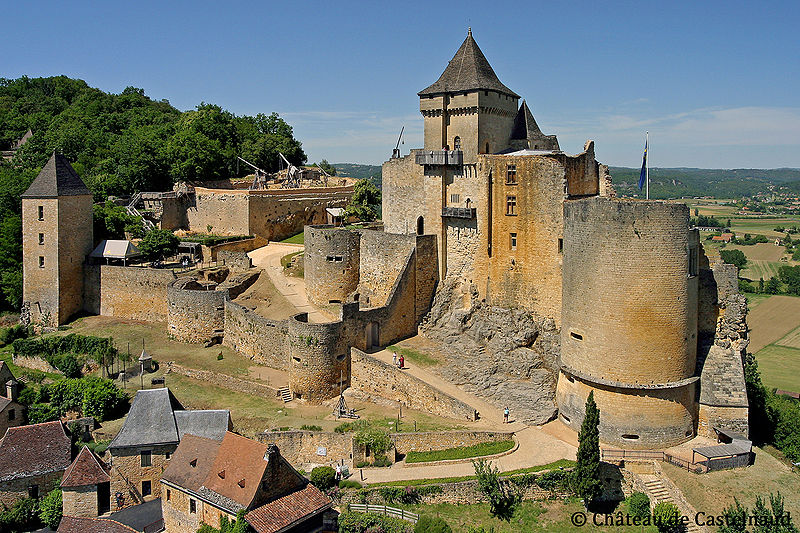
Château de Castelnaud
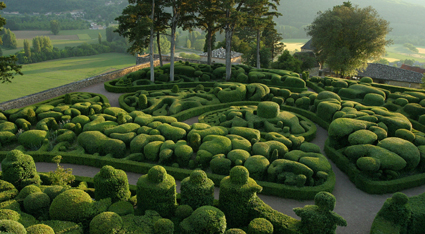
Jardins de Marqueyssac
Many also visit the myriad of small castles often perched on cliffs, such as the medieval fortress of the Château Castelnaud, or the remarkable Jardins de Marqueyssac (Gardens of Marqueyssac) in a private 18th century castle; the gardens which dominate the surrounding valleys, are some of the most romantic examples of this period.
But Dordogne also holds a fascination for the gourmet. This is the land with such celebrated specialties as the foie gras, black truffle of Périgord, magret de canard (duck magret), pommes de terre sarladaises (sarladaises potatoes), nuts, and wines of Domme, Bergerac, Monbazillac and Pécharmant.
