Girls’ Day (Hinamatsuri) in Japan

HinaSet

On March 3rd, Hinamatsuri (雛祭り) is celebrated in Japan. This is a day when families with little girls wish “health and happiness” for them. Hina refers to the kind of dolls traditionally put on display for the celebration. Matsuri means “festival” in Japanese. Putting them together, Hinamatsuri means something like, “Hina-doll Day”. However, Hinamatsuri is commonly referred to as “Girls’ Day” in English.

Hina-dolls (雛人形 hina-ningyou) are dressed in traditional court kimonos of the Heian period (794-1192). The dolls are displayed on tiered platforms covered with a red carpet.


Here’s what you find in each tier:

-First (top) Tier
The Emperor and Empress, called 内裏雛 dairibina, are placed in front of a gold folding screen (屏風 byoubu).

-Second Tier
Three court ladies (三人官女 sannin-kanjo)

-Third Tier
Five musicians (五人囃子 gonin-bayashi)

-Forth Tier
Two ministers: the Minister of the Right (右大臣 udaijin) and the Minister of the Left (左大臣 sadaijin)

-Fifth Tier
Three samurais as the protectors (衛士 eji) of the Emperor and Empress

Small decorative items are also put on the platform: lamp stands, lanterns, vases of artificial peach branches, and diamond shaped rice cakes on little tables are some examples.

A complete set might get too big and pricey, and therefore usually a compact version is displayed in a small household. The smallest version will be to have just the top tier dolls: the Emperor and Empress.

There’s also some food to go with the celebration: 雛あられ hinaarare (bite-sized, sweet, pastel-colored rice crackers),菱餅 hishimochi (diamond-shaped, pastel-colored rice cake), ちらし寿司 chirashizusi (sushi rice topped with fish, vegetables, eggs, and shiitake mushrooms), and clear clam soup are usually served on Hinamatsuri.


France’s ‘Comfort Foods’

If ‘comfort food’ means a dish associated with a sense of home or contentment, then it could be argued that most foods in France fit that label. Indeed, following the stereotype, French people regard food as altogether convivial, pleasurable and nourishing. In winter however, an emphasis is on warm, filling foods. Below are some classic examples (with links to recipes):

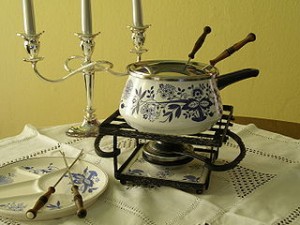
Fondue Bourquignonne

Fondue Bourquignonne: Swiss in origin, this dish involves a caquelon (name for the cooking vessel used for fondue) in which bite size pieces of beef (especially Charolaise, a breed of cattle from Burgundy) are plunged into hot oil by each guest. Once the meat is cooked, an assortment of sauces is used to accompany it, mainly mayonnaise, sauce béarnaise, and sauce tartare.

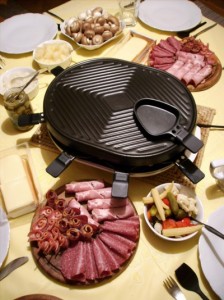
Raclette

Gratin Dauphinois: An oven-dish made with thinly sliced and layered potatoes and cream, with a thick browned crust of gruyère cheese. The Gratin Dauphinois is a speciality of the Dauphiné region.

Raclette: Like Fondue, people gather, this time around a four à raclette (little electric table-top grill) placed on the table. Each guest puts some semi-firm cow’s milk cheese (known as fromage à raclette) in small pans called coupelles inside the grill. Once melted, the cheese is poured over boiled potatoes, vegetables and charcuterie (deli meats).


Spanish comfort food: Caldos

Caldo (stock) is my favorite Spanish comfort food. Whether you drink a hot bowl of caldo by itself or boil some pasta in it to serve it as an appetizer, this delicious comfort food can be made easily and will last in the freezer for up to 3 months.

Homemade caldo does not need a lot of time and attention: it takes just 20 minutes to cook caldo de pescado (fish stock), and up to 2 1/2 hours for most caldo de carne (meat stocks).

Caldo de pescado: Fish Stock

Fish stock can be made with a mixture of any white fish and crustaceans, and crabs are a very good addition.

For 12 cups of fish stock you will need: 5 tsp of olive oil; 14oz. Crabs, 3 3/4 of fish; 1 gallon of water.

Put a large pot over medium heat, then add the olive oil. Add the crabs. Cook for 3 to 5 minutes. Add the fish. Pour in the water and bring to a simmer. Skim the foam from the surface. Simmer for 20 minutes, then strain through a fine-mesh sieve. Cool before putting into containers.

Caldo de ternera: Beef Stock

For 8 cups of beef stock you will need: 1 small onion, 4 1/2 oz of beef scraps or cheap pieces of meat, such as shank; 1 1/2 oz. of beef bones, raw; 2 1/2 lb. of carrots; 6 lb. of celery and 1 1/3 gallons of water.

Instructions: Cut the onion in half. put the beef and bones in a very large stock pot with the carrots, onion and celery. Pour in the cold water and bring to boil. Skim the foam from the surface. Simmer for 2 1/2 hours. Strain though a fine-mesh sieve. Cool before putting into containers.

Caldo de jamón: Ham Stock

This recipe requires the bones from a cured ham. Ask your butcher to supply them. Remove any meat from the bones and use in another recipe.

For 8 cups of ham stock you will need: 3lb. of Ham bones, 1 gallon of water.

Instructions: Remove most of the meat from the ham bones. put bones into a very large saucepan. Pour in the cold water and bring to boil. Skim the foam from the surface. Simmer for 1 1/2 hours. Strain through a fine mesh sieve. Cool and skim away any fat from the surface before putting into containers.

Caldo de pollo: Chicken Stock

For 8 cups of chicken stock you will need: 1 small onion, 1 whole, cleaned, raw chicken carcasses (2 1/2 lb. equals 4 carcasses); 1 1/2 oz. of beef bones, raw; 1 big carrot; 1 celery and 1 1/3 gallons of water.

Instructions: Cut the onion in half. put the carrot, onion, celery, and chicken carcasses into a very large pot. Pour in the cold water then bring it to boil. Skim the foam from the surface. Simmer for 2 1/2 hours. Remove the chicken and the vegetables and strain through a fine-mesh sieve.

Note: After straining the ingredients for meat-based stocks, do not throw the bones and other ingredients away! They can be reboiled for 45 more minutes and the liquid from this second boiling called “segundo caldo” (second stock), can be used instead of water when making the next batch of stock to give it a deeper flavor. Fresh stock will keep in the fridge for up to 2 days, or in the freezer for up to 3 months!


Enjoy!


Chinese Hot Pot: The Perfect Comfort Food

When the weather is cold, Chinese people like to have hot pot 火锅 (huǒ guō).

A hot pot is a metal pot that is placed in the center of the table and contains broth. The broth continuously simmers while different ingredients are added and cooked. Throughout the whole meal, one can add, meat, seafood, vegetables… any ingredients you wish.

There are many different kinds of hot pots. My favorite kind of hot pot is seafood. Not every Chinese restaurant serves hot pot since it requires a simmering metal pot of stock at the center of the dining table. In Taiwan, there are restaurants that serve hot pot exclusively and you can easily find out which restaurants serve it by their name. Since hot pot is not as commonly seen here in the States, anyone who wants to try it will need to do a little bit of research or ask their Chinese friends.

If you’d like to try making hot pot at home, add chopped corn, a big pork bone, carrots, celery, tomatoes, and some Chinese herbs to make the broth. Once it starts boiling, you can add in meat or seafood and the vegetables that you like.

Photo Credit: Thinkstock

Valentine’s Day in Japan and China


Japan

By Sakura

Valentine’s Day (バレンタインデー barentain dee) in Japan is celebrated quite differently from the U.S; women give chocolates to men.

There are two “types” of chocolates. One kind is called 義理チョコ giri choko (“obligaition chocolate”) – this is the kind of chocolate that girls give to boys without any romantic feelings toward them. For example, in an office situation, a female worker would choose to give 義理チョコ giri choko to all the male coworkers.

The other kind is 本命チョコ honmee choko (“favorite chocolate”). A girl gives this type of chocolate to her real love. She could be giving 本命チョコ honmee choko to her boyfriend, but she can also take this opportunity to confess to somebody that she has a romantic feeling for him.

Not surprisingly, girls spend more money or effort to prepare the honmee choko. It could be from a top brand, such as Godiva. Or, she could spend time making her own heart-shaped chocolate pieces. On the other hand, giri choko can be something just fun and cheap that you can find at a grocery store or a convenience store.

So Valentine’s Day is the day boys receive a ton of chocolates! However, if you receive chocolates on Valentine’s Day, you are obliged to return the favor by giving the girls some gifts (usually candies) on March 14, which is called ホワイトデー howaito dee (“White Day”).

China

By Khung

In Taiwan, many young couples celebrate Valentine’s Day on February 14 by buying gifts for each other or going to a restaurant for a nice dinner.

Sometimes, a girl will give a boy that she likes a gift. If the boy likes the girl as well, then on March 14- we called it “White Day” (白色情人节 bái sè qíng rén jié)-he will give the girl a gift in return. (Note: Not everybody does it though)

Valentine’s Day is from Western culture. Chinese people do have their own Valentine’s Day which is on the 7th day of the 7th lunar month on the Chinese calendar. Traditionally, couples will visit a temple called “Temple of Matchmaker” and pray for happiness and future marriage. Single people also visit to pray for luck in finding love. However, nowadays most people celebrate it by buying eachother gifts or having a nice dinner just like any other holiday.

Photo Credit: Thinkstock

Mardi Gras in France

Carnaval de Nice


Mardi Gras was the last day Christians could eat des mets gras (fatty foods) before spending 40 days of prayer and meat abstinence, until Easter. This day announced the beginning of Carême (Lent). It marks in a climactic fashion the end of la semaine des sept jours gras (week of seven fat days fat), once called jours charnels (carnal days). This period precedes le mercredi des Cendres (Ash Wednesday).

Mardi Gras is celebrated in various cities around France, like Paris, and especially Nice with its Carnaval de Nice, one of the largest carnivals in the world (February 15th to March 6th). This year, the carnival theme is ‘Roi des 5 Continents’ (King of the 5 continents). The word carnaval comes from the Latin “carne levare” (to remove the meat).

On this occasion, people traditionally eat les beignets du carnaval (a type of donut) rather than crêpes. And if the religious history remains more in the background today, Mardi Gras is nevertheless celebrated for an occasion to wear fantastic masks and colorful costumes, and party in the streets!


Beignets


Italian Comfort Food

Photo Credit: Thinkstock

Italian comfort food is eaten while “it is cold outside baby” (fa freddo fuori, baby). Given that Italy has many food traditions and cultures, it is rather difficult to generalize. That said, there are three main comfort foods: Zuppa (soup) is of course very common and the most popular ones are vegetable soups like minestrone, zuppa di fagioli, zuppa di ceci. Then there are beverages: Cioccolata calda (hot chocolate) which is always very, very thick. Caffelatte (coffe and milk) is another common beverage, and some would add miele (honey) into it. Minestrone (literally big soup) recipes vary a lot, actually it should be made with whatever vegetables are in season. Below you can find a basic version:

Ingredients

  • 2 tablespoons extra-virgin olive oil
  • 2 Stock cubes (unless you have actual broth)
  • 1 large onion, diced
  • 4 cloves garlic, minced
  • 2 stalks of celery, diced
  • 1 large carrot, diced
  • 1/3 pound green beans
  • Basil
  • Salt and pepper
  • 4 fresh tomatoes
  • 1/3 pound of kidney beans, drained and rinsed
  • 2 tablespoons chopped fresh basil

Directions

Heat olive oil in a large pot and add onion and cook for 5 minutes. Add the garlic and cook for 15 seconds and then add celery, carrot, and tomatoes. Cook and stir until they begin to soften then add the beans, basil, and 3/4 teaspoon salt. Cook for 5-10 mins.

Add water and stock cubes and reduce the heat to medium and let it cook for 8-10 minutes and keep stirring. At this point, if you like you can add any type of pasta and cook until pasta is ready.

Japanese Comfort Food

The most internationally famous Japanese comfort food is probably ラーメン ramen. Packages of instant ramen noodles found at American supermarkets are cheap, easy-to-make, and filling. But if this is the only kind of ramen that you’re familiar with, I ask you to try ramen at restaurants. You’ll be surprised how different it is from the grocery store kind! If you live in a big city, you may even find restaurants specialized in ramen. There are many different styles of ramen; for one thing, there are various soup flavors (醤油 shouyu ”soy sauce”, 味噌 miso “miso”, 塩 shio ”salt”, 豚骨 tonkotsu ”pork bone”), and for another, each restaurant usually has their own special recipe, so ramen from one restaurant is likely to be quite different from ramen from other restaurants. So it will be fun to try ramen from different places and find out what your favorite is.

Comfort food the Lebanese Way


The Middle East, known for its variety of cuisines, is no stranger to comfort food.

My mother’s pride and joy (other than me, of course), is her homemade Hummus dish, made from scratch.

Here’s her recipe:

INGREDIENTS

  • chickpeas
  • water
  • Tahini paste
  • garlic cloves
  • salt and lemon juice to taste

PREPARATION

First, soak the chickpeas overnight, rinse with fresh water, and boil for about an hour. While they are still hot, mash in a food processor.
Second, add some Tahini paste, 2 cloves of garlic, and some salt and lemon juice (depends on your taste, my mom’s hummus is a bit tangy).
Last, mix the mixture for a few minutes. You can also add parsley for garnish and some cumin to give it an edge.

صحتين Bon appetit

La Tarte aux Pommes: A French Must

In the spirit of National Pie Day tomorrow, we wanted to give you a delicious recipe for a French apple tart!

This classic tarte aux pommes (French Apple Tart) contains two layers of apples. Compared to the American pie, this tart uses a pâte sucrée (sweet pastry crust) akin to a Sable cookie dough. The apples are glazed with apricot preserves to give it an attractive sheen and to keep the apples moist. This French apple tart can be served warm. Top it with vanilla ice cream, whipped cream or crème fraîche.

INGREDIENTS:

Sweet Pastry Crust

  • 1 to 1 1/2 cups (195 grams) all purpose flour
  • 1/4 cup (50 grams) granulated white sugar
  • 1/8 teaspoon salt
  • 1/2 cup (113 grams) unsalted butter
  • 1 large egg


Apple Filling:

  • 6 firm textured apples (about 2 pounds; 900 grams)
  • 3 tablespoons (40 grams) unsalted butter
  • 1/4 to 1/2 cup (50-100 grams) granulated white sugar, and confectioners’ sugar for browning the top layer of apples
  • 1/2 teaspoon lemon zest
  • 1/2 teaspoon cinnamon


Glaze:

  • 1/2 cup (120 ml) apricot preserves
  • 1 tablespoon Cognac or Calvados


PREPARATION:

Sweet Pastry Crust: Place the butter in a mixer, beating until softened. Add the sugar, beating until fluffy. Add the egg, beating gradually until incorporated. Add flour and salt, mixing to a ball. Flatten the dough into a disk, and refrigerate (until firm) with a plastic wrap cover.

Spread some flour on a surface, and roll out the pastry into an 12 inch (28 - 30 cm) circle about 1/8 inch (3 mm) thick. Keep lifting up and turning the pastry a quarter turn as you roll with a rolling pin (always outwards) to preserve a uniform thickness and prevent it from sticking.

Place pastry into an 8-inch tart pan with removable bottom. With a small floured piece of pastry, lightly press the pastry into all sides of the pan. With the rolling pin, get rid of any excess pastry. Prick the bottom of dough to prevent it from puffing during baking. Cover and refrigerate (at least 20 minutes).

Preheat oven to 400 degrees F (205 degrees C) with a rack in center of oven. Use parchment paper or aluminum foil to line the pastry shell. Fill the tart pan with evenly distributed pie weights (or beans) to the top of the pan. Bake the crust for 20 to 25 minutes until crust becomes dry and lightly browned. Remove the weights and let the crust cool.

Apple Tart: For bottom layer of apples: Peel, core, and slice three of the apples. In a large skillet melt 1 tablespoon of unsalted butter and stir in between 2 to 4 tablespoons (25 - 50 grams) of the sugar, the lemon zest, and 1/4 teaspoon cinnamon.

Add the apples and saute over moderate heat, stirring occasionally for 7 to 10 minutes, or until the apples are soft. Gently mash the apples with the back of a spatula or spoon and stir the mixture until most of the liquid has evaporated. Remove from heat and let cool.

For top layer of apples: Peel, core, and cut the apples into slices 1/4 inch (1/2 cm) thick. Melt 1 tablespoon of butter in a large skillet over medium heat and stir in the other 2 to 4 tablespoons (25 - 50 grams) sugar and 1/4 teaspoon cinnamon. Add the apples and saute until they begin to soften, approximately 5 minutes. Set the cooked apples aside.

Spoon the applesauce mixture into the cooled pre-baked tart shell. Arrange the apple slices in concentric circles over the applesauce, and brush with 1 or 2 tablespoons of melted butter. Bake the tart on a baking sheet in a preheated 350 degree F (177 degree C) oven for 25 - 30 minutes or until the apples are lightly browned and soft.

To achieve a golden brown and crisp look, remove the tart from the oven and sprinkle it with confectioners’ sugar. Cover the edges with a foil, and put the tart under a preheated broiler, about 4 inches from the heat.

Apricot Glaze: In a small saucepan heat the apricot preserves to a boil. Remove from heat and strain to get rid of lumps. Add a touch of Cognac or water. Brush the top of the finished tart with this glaze and to seal the baked tart shell. Top with vanilla ice cream, whipped cream or crème fraîche.

Bon appétit!